Introduction
I’ve found it undesirable to fit in with groups or to be like others. This came up in therapy once, and my therapist at the time assigned me a question to think about how I could still participate among others without losing my individuality. I ended up responding with an essay, thinking about this probably way too much and confusing myself in the process. Here is that essay.
Question
How can I maintain my individuality and still be who I am as I navigate my way amongst other hoomans?
Individuality
Individuality is defined as the aggregate of qualities that distinguish one person from another. This would mean that individuality is relative; it requires comparison with another.

If A is the qualities q of person A, and B is the qualities q of person B (Fig. A), then
individualitypersonA = A \ B = {q ∈ A | q ∉ B}
That is to say that person A’s individuality is all those qualities that person A has but person B does not.
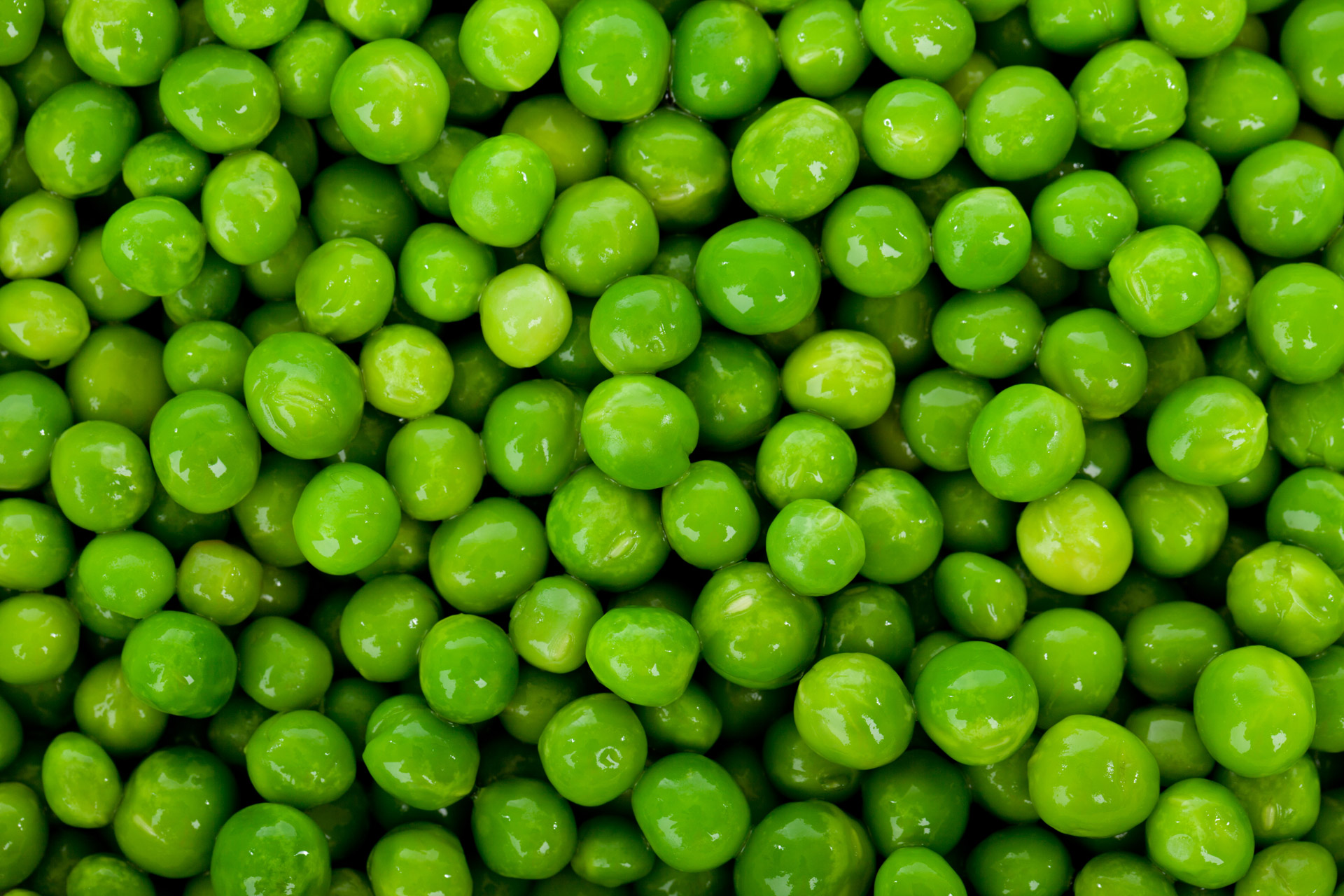
These qualities can change. However, it is not likely that all of these qualities will ever be exactly the same as another’s qualities. To be “you” is to be an individual, and to be an individual is to be distinct or separate from others however subtle that distinction might be—like comparing peas in a can of peas; they may look similar, but inspecting them more closely can reveal subtle differences (Fig. P).
Using a team analogy, people can work together in a team, like playing a basketball game, yet they are individuals distinct from one another. Team members may use their unique individual qualities to attain a shared goal.
If these qualities make me who I am, then what if these qualities change? Does that mean that I myself have changed, that I as a person have changed? And if that is the case, then what does it mean to maintain one’s individuality? What does it mean to be who I am? Can “I” be a different “I” at different points in time?
I =? It
Identity
What makes people who they are? Perhaps feelings, actions, beliefs, interests. So too perspectives, one’s way of viewing the world shaped by past experiences and perhaps biology as well—one’s genes, DNA.
Even if a person were to lose all of his/her memories—people with amnesia are still themselves. They are still individuals. And even if all the aforementioned qualities were to change in a person, that person is still him/herself1. That person is still an individual. Thus, I’ve coined the term you-ness, what makes a person him/herself, or self-ness. It’s something that remains even after thoughts, feelings, actions, memories, etc. change or are lost.
And what of people who conform or strive to be like others, who would rather lose all sense of themselves, who try to be someone else? I think the answer lies in “someone else.” They are still themselves; no matter how much they want to be someone else, no matter how much they change their actions or anything else, they still have their own self-ness, their own perspective, their own consciousness.
So even if I am among others, I have my own consciousness, my own perspective, my own me-ness. Even if my individuality (the particular qualities that make me different from others) changes, I am still a distinct individual even if it were the case that I’d rather not be.
So perhaps my final answer is via consciousness. I have my individual consciousness. Mine is the only head that I can ever be in. Even if each person in a team seems the same, each person is an individual with his/her own sense of consciousness (or so I assume).
Or back to the pea analogy, even if one can’t observe differences among the peas, each pea is still an individual. It’s still a distinctly different object; it’s the same type of object, but it’s a different object. Still a pea, but it’s a different pea. It’s not the same pea. Y’know? So like even if the peas aren’t conscious, they’re still each different.
So my final final answer is I just am. I just am an individual. I don’t have to try to be different. I am just a different person, distinct. Not the same. I can be among others and still be who I am because I am whatever this is—perhaps a collection of experiences. I don’t know. What was the question?
Perspective
Even if I were to end up doing the same things as others, I still have my own perspective. My own experiences, thoughts, feelings, beliefs, and behaviors help to shape my perspective, and these all interact and influence one another (Fig. C).

It’s like making a cover of a song; it’s a song that someone has already written and performed, but the people who do a cover are putting their own take on it, making their own version of the same thing.
Someone could have the same experience but have a completely different perspective on it. “Whoa, that event was cool,” says person A to person B, and person B replies, “Uhhh, did we go to the same event?”
One’s perspective can change and be influenced by others; however, because of the complex interaction of experiences, beliefs, feelings, etc. (Fig. C), I don’t think it’s likely that any two perspectives are exactly the same.
You
Perhaps “you” is the sum of all the yous you’ve ever been. Therefore,
u = ∫Udt ⇒ u = Ut + C,
where u is you, U is all the yous you’ve ever been, t is time, and C is some constant. Everything is variable but C, and I will say that this C is one’s you-ness.
you = all of the yous × time + your youness, and the you-ness is unchangeable, and perhaps distinct.
Conclusions
First and foremost, I know nothing.
Now that that’s been established, I guess I’m some ever-changing terms with some constant C. My qualities can change which means that my individuality can change, and seemingly “I” can change. Perhaps there is some quality or essence of me that never changes; I have a me-ness. Whoa, I never learned that in biology class.
I suppose I have come up with three answers for the concern of staying who I am.
Answers
- I can work with others and use my unique (more or less) combination of skills, perspective, and other qualities (i.e., my individuality) to achieve a shared goal, even as these qualities change.
- Looking past the qualities of individuality, individual consciousness seems to enable me to be an individual.
- I don’t have to do anything to still be who I am because I just am who I am.
- Though what about when people say, “Oh, you’re not yourself anymore. You’re not you”? Like, “You’re not you when you’re hungry. Have a Snickers.” I guess that’s where you-ness comes in.
 Currently Untitled
Thanks for sharing an interesting piece. I think an important part of individual consciousness is the ability to ask questions. In that way, when operating in a group, you might adopt customs and behaviours to fit in or to achieve a particular goal, but being questioning, means that you retain some independence and individuality to it.
Would it be ok to share this on my blog, with a link and credit to you?
LikeLike
Sure!
LikeLike
This is amazing. You must be a biology major. I’d say breathing makes one an individual.
LikeLiked by 1 person
Thank you! Not a biology major exactly though I have had an interest in biology and can see why someone would think that. And breathing, yeah I can see that. Thanks for your take! 🙂
LikeLike